July 13, 2026 · Kollavo
Query Fan-Out: How AI Search Turns One Query Into Many (and How to Rank)
Query fan-out is how AI search engines expand a single question into a swarm of sub-queries, retrieve passages for each, and synthesize one answer. Here is how it works and how to win the fan-out.
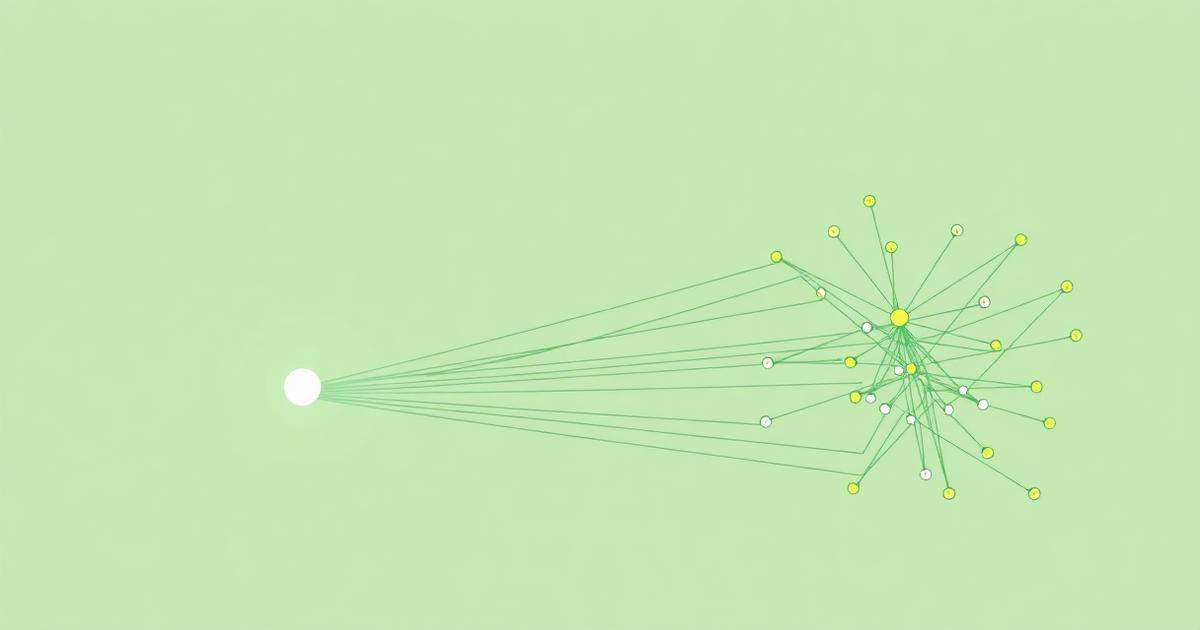
Answer: Query fan-out is the technique AI search engines use to answer a question by silently expanding it into many related sub-queries — reformulations, comparisons, clarifications, and follow-ups — running them in parallel, retrieving passages for each, and synthesizing one answer from the best results. To rank in AI search, you no longer optimize for one keyword; you make sure your content is the best available answer to the whole cluster of sub-queries a system fans out from your topic.
What Is Query Fan-Out?
When you type a question into Google AI Mode, ChatGPT, Gemini, or Perplexity, the system rarely searches for your exact words. Instead it decomposes your question into a set of related queries — a "fan-out" — that together cover the intent behind what you asked.
Ask "best CRM for a small agency" and the engine may fan out into: CRM pricing for small teams, CRMs with client management, HubSpot vs Pipedrive for agencies, free CRM options, CRM with email integration, and more. It retrieves passages for each branch, then assembles a single synthesized answer with citations.
The consequence is profound: the page that gets cited is often not the one that best matches the original query, but the one that best answers a sub-query the user never typed.
Try it free: Use the Query Fan-Out Generator to see how any seed query fans out across Google AI Mode, ChatGPT, Gemini, and Perplexity — grouped by intent — then map your content to the gaps.
Why Query Fan-Out Changes SEO
Traditional SEO optimized a page for a keyword and its close variants. Query fan-out breaks that model in three ways:
- One query becomes dozens. You are no longer competing for a single phrase but for coverage across an expanding tree of sub-queries.
- Retrieval is passage-level. Engines pull individual chunks, not whole pages. A single well-structured section can win a sub-query even if the rest of the page is unrelated.
- Breadth beats exact-match. Content that thoroughly answers the surrounding questions gets retrieved more often, because it matches more branches of the fan-out.
This is why comprehensive, well-structured content — not keyword density — is the new ranking lever. For the deeper strategy, see Query Fan-Out for GEO.
The Types of Sub-Queries Engines Generate
Fan-out branches tend to fall into recognizable intent categories. Understanding them tells you what content to build:
- Reformulations — the same question in different words ("what is query fan-out" / "how does query expansion work").
- Comparisons — "X vs Y", "alternatives to X", "best X for Y".
- Clarifications — narrower slices ("query fan-out in prompt engineering", "for local search").
- Procedural — "how to", "steps to", "how do I set up".
- Evaluative — "is X worth it", "pros and cons", "does X work".
- Definitional / contextual — background the model needs to frame its answer.
A single page that leads with a definition, includes a comparison table, and closes with a how-to and an FAQ can win branches across several of these categories at once.
How to Win the Fan-Out: A Framework
You cannot see every sub-query an engine generates, but you can engineer your content to match the most likely ones.
- Generate the fan-out first. Before writing, expand your seed topic into its probable sub-queries. The Query Fan-Out Generator does this and groups results by intent and engine.
- Cluster the sub-queries. Group them into reformulations, comparisons, procedural, and evaluative buckets.
- Map each cluster to a section or a spoke page. High-volume, distinct clusters deserve their own article; tight variations become sections within one page.
- Structure for passage retrieval. Lead every section with a self-contained answer capsule so any chunk can be lifted into an AI answer. See How to Write Content That Answers the Full Fan-Out.
- Interlink the cluster. Link the pillar to each spoke and back, so engines (and users) can traverse your full coverage of the topic.
- Measure retrieval, not rankings. Track which pages get cited in AI answers, not just position. See Query Fan-Out vs Traditional Keyword Research.
Query Fan-Out Across the Major AI Engines
Every major AI search surface uses some form of query expansion, but the mechanics differ. Google AI Mode leans on its "query fan-out technique" over the search index; ChatGPT and Gemini rewrite and decompose queries before browsing; Perplexity runs multi-step retrieval with visible sources.
- Deep dive on Google: How Google AI Mode Uses Query Fan-Out.
- Deep dive on assistants: Query Fan-Out in ChatGPT, Gemini & Perplexity.
Frequently Asked Questions
Is query fan-out the same as keyword research?
No. Keyword research finds phrases people type into a search box. Query fan-out is what the engine generates internally after you ask — the hidden sub-queries it uses to build an answer. You optimize for the fan-out by covering the whole cluster of intents, not by matching one phrase.
Can I see the actual sub-queries an AI engine generates?
Not directly — they are internal. But you can model them closely. Tools like the Query Fan-Out Generator reconstruct the likely fan-out so you can plan coverage against it.
Does query fan-out mean I need more pages?
Not always. Tight variations belong in sections of one strong page; genuinely distinct intents deserve their own spoke pages. The goal is complete coverage of the cluster, delivered in the fewest, best-structured pages.
Which content structure wins fan-out branches?
Passage-first structure: a short answer capsule at the top of every section, question-based headings, lists and tables for facts, and an FAQ. Each chunk should answer a likely sub-query on its own.
How is this related to GEO?
Query fan-out is the retrieval mechanism; Generative Engine Optimization (GEO) is the practice of optimizing for it. Winning the fan-out is a core GEO objective.
Explore the Query Fan-Out cluster
This is the pillar guide. Go deeper on each part: